Charfen.co.uk: What It Is, What It Offers, and What Readers Should Know?
When I first look at a website such as charfen.co.uk, I think the most important question is not simply whether it has a professional design or a large collection of articles. I want to understand what the website actually offers, who it is intended for, and whether the information presented gives readers enough context to make informed decisions.
That matters because websites can serve very different purposes. Some focus on a specific industry, while others operate as broad publishing platforms covering multiple subjects.
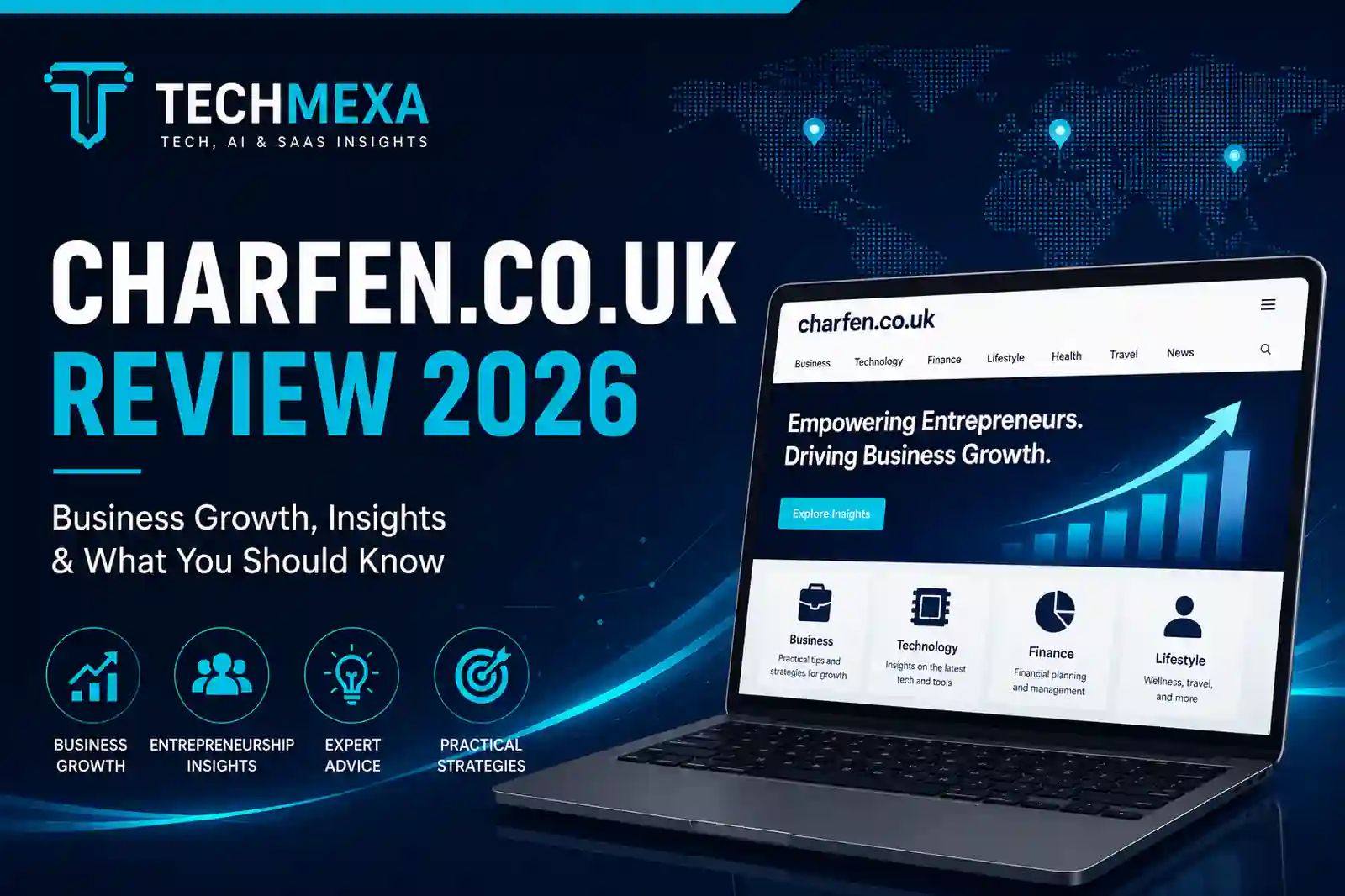
After reviewing the publicly available pages on charfen.co.uk, I found that the site presents itself as a source of business, entrepreneurial, technology, lifestyle, finance, travel, and other informational content. Its About page specifically describes the platform as a place for entrepreneurial advice, practical strategies, expert-led insights, and business growth resources.
At the same time, I think readers should distinguish between what the website says about itself and what can independently be verified. That distinction is particularly important when evaluating newer or broadly focused websites.
What Is Charfen.co.uk?
Charfen.co.uk is a UK-oriented content website that publishes articles across several categories. Its visible sections include business, technology, lifestyle, news, travel, finance, and other general-interest subjects.
The site’s About page places considerable emphasis on entrepreneurship and business development. It says the platform aims to provide actionable strategies, expert-led insights, and practical guidance for entrepreneurs and business professionals.
However, when I examine the site’s current blog content, I see a much broader publishing model than a specialist business consultancy. Recent listings include subjects ranging from business financial management and influencer marketing to AI website builders, crypto-related topics, healthcare information, travel, and lifestyle.
That distinction is useful for anyone researching the keyword charfen.co.uk. I would describe the website primarily by what its current public content demonstrates rather than by assuming it operates like a narrowly focused consulting company.
What Kind of Content Does Charfen.co.uk Publish?
The content structure is one of the easiest ways for me to understand the site’s current positioning.
The business section includes articles covering subjects such as remote work, business operations, insurance, AI website builders, and offshore company formation.
The broader blog contains an even wider selection of subjects. For example, the site currently lists articles about financial management, influencer marketing, crypto cards, AI-powered crypto trading, business mindset, healthcare certification, and other topics.
This tells me that charfen.co.uk currently functions more like a broad information and publishing platform than a website dedicated exclusively to one professional discipline.
For readers, that can be useful because a broad publication gives them access to different subjects in one place. However, it also means that I would evaluate individual articles according to their topic, author information, sources, and evidence rather than assuming that every page represents specialist expertise.
Charfen.co.uk and Business Growth
Business growth appears prominently in the site’s stated mission.
According to its About page, Charfen.co.uk wants to help entrepreneurs and business owners improve their strategy, develop practical plans, and approach growth with greater confidence. The site also emphasizes community, support, and experience-based advice.
I find this positioning relevant because entrepreneurs often need more than motivational content. Business owners usually need practical information about planning, operations, marketing, finance, technology, leadership, and startup growth tools.
Still, I would avoid treating general website content as a substitute for professional business, financial, legal, or other specialized advice. When an article covers a subject with significant financial or legal consequences, I would verify important claims against primary or authoritative sources before acting on them.
Is Charfen.co.uk the Same as Charfen.com?
This is one area where I believe readers should exercise particular caution.
There is an established website at charfen.com associated with Alex Charfen and his business-growth work. That website describes services and frameworks aimed at entrepreneurs and business owners.
However, I found no sufficient evidence on the current charfen.co.uk pages I reviewed to establish that the UK domain is officially operated by or affiliated with the organization behind charfen.com.
Because the names are similar, it would be easy to make an assumption. I would not make that assumption without an explicit statement from the respective organizations confirming the relationship.
This is an important trust principle whenever I research websites online: similar branding or domain names do not automatically establish ownership, partnership, or affiliation.
What Should I Check Before Trusting Information?
I understand why someone searching for charfen.co.uk might feel uncertain. A website can look polished while still leaving important questions unanswered, and it is reasonable to want more information before relying on it.
I normally check several signals.
1. Author Information
First, I look at who wrote the article.
Google’s guidance on helpful, reliable, people-first content emphasizes the importance of making it clear who created content and providing appropriate authorship information. Google also explains that experience, expertise, authoritativeness, and trustworthiness help its systems identify useful content.
For specialist subjects, author credentials become particularly important.
2. Supporting Sources
I also check whether important claims have supporting evidence.
A useful article should not simply make confident statements. Where statistics, scientific findings, financial information, regulatory requirements, or technical claims appear, I prefer to see reliable primary sources or recognized authoritative references.
3. Transparency
I also consider whether the website clearly explains who operates it, what its purpose is, and how readers can contact the organization.
Transparency does not automatically prove that a website is trustworthy, but a lack of clear information can make independent evaluation more difficult.
4. The Purpose of the Content
Finally, I ask why the article exists.
Google’s current Search Central guidance recommends creating content primarily for people rather than producing pages mainly to manipulate search rankings. It also recommends considering the “Who, How, and Why” behind content creation.
That is a useful standard for evaluating charfen.co.uk as well as any other content website.
Are There Reasons to Be Cautious?
Yes, but caution should not automatically mean distrust.
Some third-party website-checking services currently provide mixed assessments of charfen.co.uk. For example, ScamAdviser describes the domain as likely safe while also noting that the site appears relatively young and has limited traffic signals. Another automated service, Scam Detector, gives the domain a much more negative assessment.
I would not treat either automated score as definitive proof that a website is legitimate or illegitimate.
Automated trust scores can be useful as screening tools, but they should not replace direct verification. I would look at the site’s ownership information, content quality, contact details, external reputation, security, and the specific claim I am trying to verify.
This approach prevents me from making an exaggerated conclusion from a single algorithmic score.
What I Like About the Site
From my review, one positive aspect is the breadth of information available.
The site has dedicated categories and publishes material covering business and technology alongside several other areas. Its About page also communicates a clear intention to provide practical and actionable information rather than purely promotional material.
I also appreciate the fact that the website publicly explains its intended mission. That gives readers at least some context about how the publisher wants to position the platform.
However, breadth should not automatically be confused with authority. A website covering many subjects needs strong editorial processes, appropriate authorship, accurate sourcing, and careful updating if it wants to establish long-term credibility across those subjects.
How I Would Use Charfen.co.uk?
If I were using charfen.co.uk as an information resource, I would start with articles that match my specific interests and evaluate them individually.
For general business ideas, productivity concepts, technology discussions, or introductory information, the site may provide useful starting points. I would then follow important claims back to authoritative sources before making significant decisions.
For financial, legal, health, cybersecurity, or other high-impact topics, I would use additional trusted sources rather than relying on a single general-interest publication.
This is not a criticism unique to Charfen. It is simply good information hygiene.
Conclusion
My overall assessment is that charfen.co.uk currently presents itself as a broad UK-focused information and publishing website with a strong stated interest in entrepreneurship and business growth.
Its actual content extends considerably beyond business, covering technology, finance, lifestyle, travel, health, news, and other subjects.
I would therefore avoid describing it as a narrowly specialized business consultancy unless stronger evidence establishes that positioning.
Most importantly, I would not automatically associate charfen.co.uk with charfen.com simply because the domains use similar names. The two should be treated as separate websites unless an explicit official connection can be verified.
For me, that is the most sensible way to approach the keyword charfen.co.uk: remain open to the information the site provides, but verify important claims, examine authorship and sources, and avoid conclusions that go beyond the available evidence.
That balanced approach also aligns with Google’s people-first content principles. Google emphasizes helpful, reliable information and places particular importance on trust when evaluating content quality.
If you are researching Charfen.co.uk because you came across a particular article, service, or claim on the website, you do not have to figure everything out alone. The safest approach is to examine that specific page, identify the claims that matter, and verify them against credible sources before making an important decision.