What Is Anon Vault? Features, Security, and Privacy Explained
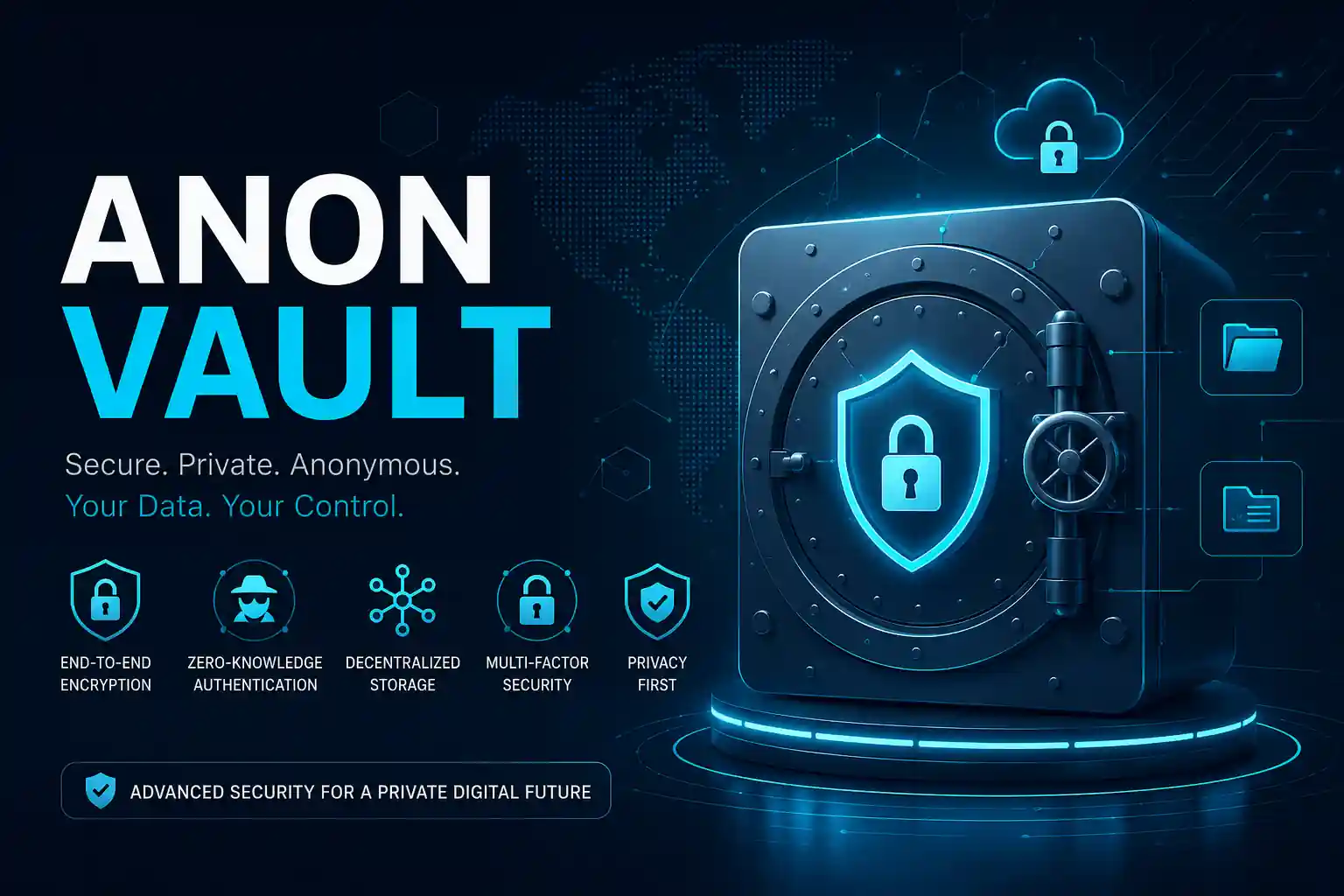
Anon Vault is a secure digital storage platform built for privacy-conscious users. It combines encryption, anonymous access, and advanced security tools to protect sensitive data.
Unlike traditional cloud storage services, it focuses on user anonymity and data ownership. It helps individuals and businesses store files securely while reducing privacy risks.
What is Anon Vault?
Anon Vault is a privacy-focused digital storage platform that helps users store, manage, and share files securely. It uses advanced encryption and anonymity tools to protect sensitive information.
The platform combines end-to-end encryption, zero-knowledge authentication, and decentralized storage.
Key Takeaways
- Privacy-focused storage platform
- End-to-end encryption
- Zero-knowledge authentication
- Decentralized storage
- IP masking and metadata protection
- Multi-factor authentication
- Quantum-resistant security
- GDPR and CCPA support
The Architecture Behind Anon Vault
It uses a layered security architecture to protect data and identity.
Files are encrypted before upload, verified through zero-knowledge authentication, and stored across decentralized nodes.
This structure improves privacy, security, and reliability.
Anon Vault Key Features
Encryption
Protects files during storage and transfer.
Anonymity
Reduces identity exposure and online tracking.
Access Control
Allows users to manage file permissions.
Cloud Integration
Supports secure synchronization across devices.
Multi-Factor Authentication
Adds an extra layer of login security.
Security Audits
Helps identify and fix vulnerabilities.
Updates
Protects against newly discovered threats.
User Education
Promotes better security practices.
Who Gains the Most From Anon Vault?
Individuals
Protect personal and financial files.
Businesses
Secure customer and company data.
Journalists
Protect sources and confidential information.
Researchers
Secure valuable research and intellectual property.
Remote Teams
Share files safely across locations.
Activists
Reduce surveillance and tracking risks.
How End-to-End Encryption Shields Your Data From Prying Eyes
- Encrypts files before upload
- Protects data during transfer
- Prevents unauthorized access
- Secures shared files
- Reduces breach risks
Zero-Knowledge Proof Verification: Authentication Without Identification
Zero-knowledge verification confirms user identity without revealing passwords or personal information.
This improves privacy while maintaining strong security.
Decentralized Storage: Why Distribution Equals Protection
It distributes encrypted data across multiple nodes instead of one server.
This reduces breach risks and improves reliability.
Advanced Encryption Protocols Implemented in 2025
It uses modern encryption standards to secure data at rest and in transit.
AES-256 encryption, secure communication protocols, and advanced key management strengthen protection.
These technologies help protect against evolving cyber threats.
Quantum-Resistant Algorithms Protecting Against Future Threats
Quantum-resistant cryptography helps protect stored data from future quantum computing attacks.
It strengthens long-term security and privacy.
How Anon Vault Maintains Anonymity Throughout User Experience
It uses minimal data collection, IP masking, metadata protection, and anonymous authentication.
These features help maintain privacy throughout the user journey.
Key Management Systems That Prevent Unauthorized Access
Encryption keys are generated and protected through secure management systems.
Access controls, key rotation, and monitoring help prevent unauthorized access.
How We Ensure a Safe Environment
It combines encryption, monitoring, access controls, audits, and software updates to maintain a secure platform.
How to Create Account?
Step 1
Visit the official platform.
Step 2
Click Sign Up.
Step 3
Create a username and password.
Step 4
Enable MFA.
Step 5
Configure privacy settings.
Step 6
Upload files securely.
IP Masking and Routing Technologies
IP masking hides user locations and network identities.
Secure routing helps prevent tracking and surveillance.
Metadata Stripping From Uploaded Files
It removes unnecessary metadata from files before storage.
This reduces identity exposure and strengthens privacy.
Threat Detection and Response Systems
It monitors user activity and network behavior in real time.
Advanced detection systems identify suspicious actions and respond quickly to potential threats.
Automated Threat Neutralization Protocols
The platform automatically blocks suspicious logins and risky activities.
This helps reduce damage and improves response times.
Security Incident Response Without Data Exposure
It investigates threats without exposing user files.
Encryption and zero-knowledge architecture keep sensitive data protected during incident response.
You May Also Read It : InSnoop Review 2026
Can Anon Vault App Be Hacked? Vulnerability Assessment
No platform is completely immune to attacks.
However, encryption, decentralized storage, audits, and monitoring significantly reduce security risks.
Independent Security Audit Results
External cybersecurity experts regularly review the platform’s security.
These audits help identify weaknesses and improve protection.
Penetration Testing Outcomes
Security professionals simulate real-world attacks to test defenses.
Results help strengthen security controls and reduce vulnerabilities.
Addressing Potential Attack Vectors
It protects against:
- Credential theft
- Phishing attacks
- Brute-force attacks
- Data interception
- Insider threats
- Malware attacks
Regular updates and monitoring help reduce these risks.
Data Sovereignty and Legal Compliance Framework
It supports responsible data management and privacy protection.
Its security framework helps organizations meet legal and regulatory requirements.
How Anon Vault Guides International Privacy Laws
The platform follows privacy-focused principles such as data minimization and user control.
These practices support global privacy expectations.
GDPR, CCPA, and Global Compliance Measures
It supports compliance through:
- Strong encryption
- Access controls
- Privacy settings
- Data minimization
- Security audits
Legal Protections for User Data
Encryption and strict access controls help protect sensitive information.
Regular compliance reviews strengthen privacy safeguards.
Why Anon Vault Is Necessary Today
Growing cyber threats and online surveillance have increased the need for secure storage.
Anon Vault helps users protect privacy and maintain control over their data.
Restoring Anonymity
Reduces identity exposure through privacy-focused technologies.
Addressing the Power Imbalance
Gives users greater control over personal information.
Reducing Systemic Security Risk
Uses decentralized storage to reduce large-scale breach risks.
The Future of Digital Vaults
Future digital vaults will focus on:
- AI-powered threat detection
- Quantum-resistant encryption
- Decentralized infrastructure
- Passwordless authentication
- Stronger privacy protections
Anon Vault already incorporates many of these trends.
Conclusion
Anon Vault combines encryption, anonymity, and advanced security technologies to protect sensitive data.
Its privacy-focused architecture makes it a strong choice for individuals and organizations seeking secure digital storage.
Frequently Asked Questions
1. What is Anon Vault?
A privacy-focused platform for secure digital storage.
2. How secure is Anon Vault?
It uses encryption, zero-knowledge authentication, and MFA.
3. Can Anon Vault access my files?
No. Only authorized users can access encrypted data.
4. Is Anon Vault legal to use?
Yes. It supports modern privacy and compliance standards.
5. Can Anon Vault be hacked?
No system is completely hack-proof, but Anon Vault uses multiple security layers to reduce risks.