Beyond the Ten Blue Links: How AI Search Is Reshaping SEO in 2026
For two decades, search engine optimization meant one thing above all else: earning a spot among the ten blue links on the first page of Google. Businesses obsessed over rankings, agencies sold their ability to climb them, and an entire industry organized itself around a single, stable idea of what a search result looked like. That idea is now coming apart.
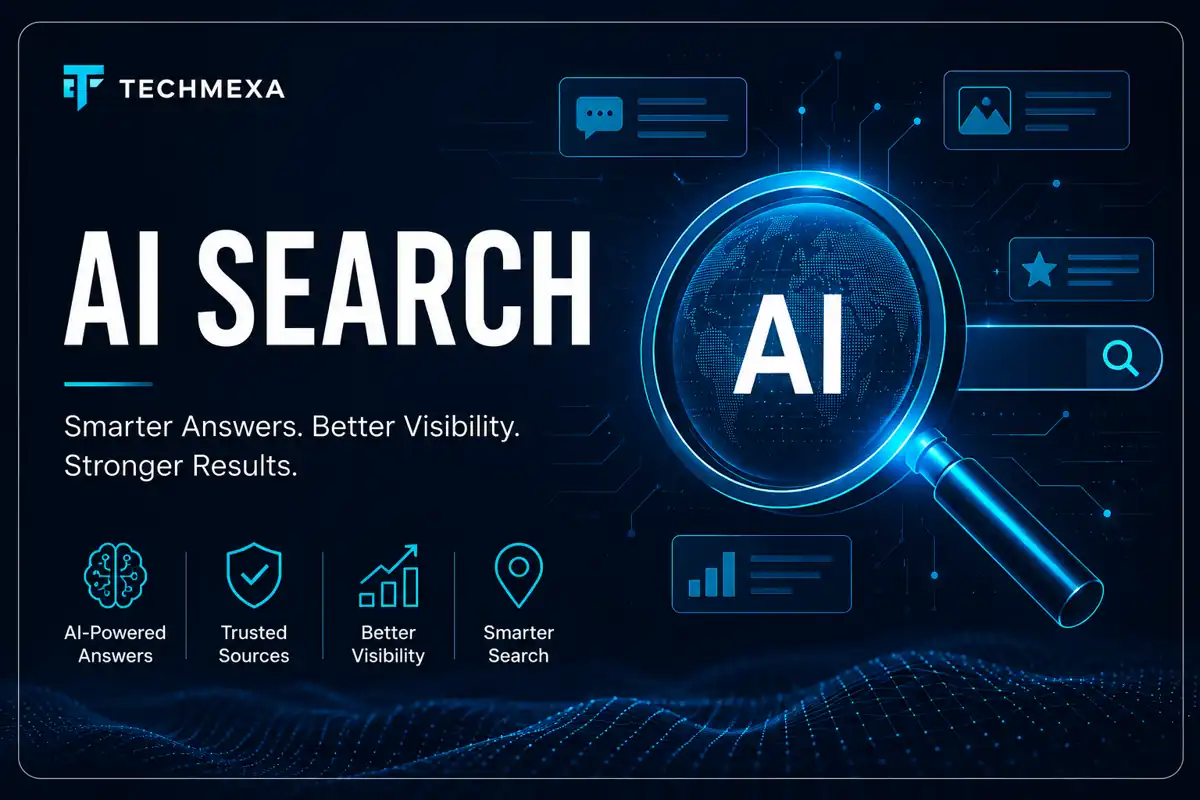
Artificial intelligence has moved from the edges of search to its center. Instead of returning a list of links and letting users sort through them, search platforms increasingly generate direct answers, summarize sources, and hold conversations. The result is a fundamental change in what it means to be found online. This article looks at how AI search is rewriting the rules, why it raises the operational stakes for agencies, and why deeply specialized providers are suddenly in the strongest position to win.
From Results Pages to Answer Engines
The most visible change is the shift from a results page to an answer page. When a user asks a question today, they are often met with a synthesized response generated by AI, assembled from multiple sources and presented before any traditional links appear. The search engine is no longer just a directory pointing outward. It has become an answer engine that interprets, condenses, and responds.
This has profound consequences for traffic. A growing share of searches now end without a click, because the answer the user wanted appeared directly on the page. For businesses, that means simply ranking in a list is no longer enough. The new objective is to become the trusted source that the AI draws from and cites when it builds its answer. Being referenced inside the response can matter more than holding a high position in the links beneath it.
In practice, this inverts many long-held assumptions. Optimization is no longer only about persuading an algorithm to rank a page. It is about earning enough authority and clarity that an AI system chooses your content as the basis for what it tells the user. The audience has expanded to include the machine that now stands between your website and the person searching.
What AI Search Actually Rewards
If the rules have changed, the natural question is what the new rules reward. Three qualities have risen to the top.
Depth and Topical Authority
AI systems tend to favor sources that demonstrate genuine, sustained expertise on a subject. A single thin page targeting a popular keyword carries far less weight than a body of work that covers a topic thoroughly, answers related questions, and signals real command of the material. Breadth without depth is increasingly invisible. The sites that get cited are the ones that have clearly earned their authority in a defined area.
Clarity and Structure
Machines reward content that is easy to parse. Clear headings, direct answers near the top of a page, well-organized sections, and structured data all make it easier for an AI system to understand and reuse your content. Writing that buries the answer under filler or wanders without structure is harder for both humans and machines to trust. Clarity has become a competitive advantage rather than a stylistic preference.
Trust and Real-World Reputation
Finally, AI search leans heavily on signals of trust. Reviews, mentions across reputable sites, consistent business information, and evidence of genuine experience all feed into whether a source is considered reliable. As answer engines try to avoid surfacing low-quality or misleading information, the reputation a business has built across the wider web increasingly shapes whether it appears in AI-generated responses at all.
Why the Operational Bar for Agencies Just Got Higher?
For SEO agencies, this new environment is both an opportunity and a burden. The opportunity is obvious: businesses need expert help navigating a landscape that changes faster than ever. The burden is that doing the work well now requires monitoring far more than a list of keyword rankings.
Modern SEO spans traditional results, AI-generated answers, local map listings, review ecosystems, and structured data, all of which must be tracked and improved at once. Multiply that complexity across a roster of clients, each with its own goals, content pipeline, and reporting needs, and the limits of spreadsheets and scattered tools become painfully clear. Important issues slip through unnoticed, opportunities go unclaimed, and reporting turns into a recurring fire drill.
This is exactly the problem that operations-focused platforms exist to solve. SEO War Room, for example, positions itself as a tools and operations platform built for SEO agencies, acting as a central command center where teams can coordinate campaigns, track performance, and execute consistently across many clients. The broader lesson reaches beyond any single product. Agencies that run on disciplined systems can absorb the rising complexity of AI search, while those relying on improvisation increasingly struggle to keep up.
In an era where search behavior and ranking signals shift constantly, operational maturity has become a genuine differentiator. The agencies that thrive are the ones that can detect change early, respond quickly, and prove their impact clearly, rather than scrambling to react after rankings have already slipped.
Why Niche Specialists Are Pulling Ahead?
The same forces rewarding depth and authority are also rewarding specialization. As AI systems favor sources with demonstrated command of a subject, generalist agencies that spread themselves thinly across every possible industry find it harder to build the kind of concentrated authority that gets cited. Specialists, by contrast, can go deep enough to own a topic.
Home services offer a clear example, and roofing in particular illustrates the point. The way homeowners search for a roofer, the urgency that follows a storm, the seasonal swings in demand, and the trust signals that turn a search into a phone call are all highly specific. An agency that lives and breathes this vertical understands not just SEO in the abstract, but the exact questions roofing customers ask and the exact moments they ask them.
A specialist such as Roofer Quest, which focuses specifically on SEO services for roofing companies, can build the deep, topic-rich presence that modern search rewards rather than learning a new industry on each client’s budget. That kind of concentrated expertise produces content with real authority, aligned with how customers actually search, and positioned to be surfaced both in traditional results and in AI-generated answers. A generalist can eventually approximate this, but a specialist begins with it.
You May Also Read It : What Is ChatPic
What Local and Home-Service Businesses Should Do Now?
For local and home-service businesses watching all of this unfold, the path forward does not require chasing every new feature. It requires focusing on the fundamentals that AI search amplifies. That means publishing genuinely helpful content that answers the real questions customers have, keeping business information accurate and consistent everywhere it appears, and actively earning reviews that establish trust.
It also means recognizing that visibility now lives in more places than the classic search results. Appearing in AI answers, local map results, and reputable third-party mentions all contribute to whether a business is found at the decisive moment. Treating these as a connected system, rather than isolated tasks, is what separates businesses that adapt from those that fade.
A Practical Playbook for the AI Search Era?
For businesses and agencies ready to act, the priorities can be distilled into a clear set of steps:
- Audit visibility across every surface. Check how you appear in traditional results, AI-generated answers, and local listings, not just one of them.
- Build genuine topical depth. Cover your core subject thoroughly enough to demonstrate real authority rather than chasing scattered keywords.
- Structure content for humans and machines. Use clear headings, lead with direct answers, and add structured data so your content is easy to interpret and reuse.
- Invest in trust signals. Gather reviews, keep business information consistent, and earn mentions on reputable sites.
- Systematize your operations. Whether in house or through an agency, run SEO as an ongoing, well-tracked operation instead of a series of one-off projects.
- Monitor whether AI answers cite you. Track not only rankings but whether your content is being used as a source in generated responses.
- Lean on specialist expertise where it counts. In defined verticals, a provider that already owns the topic will usually outperform a generalist on both depth and speed.
The Future of AI Search
AI search is still in its early stages, and its influence on digital marketing will continue to grow throughout the coming years. Search engines are rapidly evolving from information retrieval systems into intelligent assistants capable of understanding context, intent, and complex user questions.
As AI models become more advanced, businesses will need to focus less on individual keywords and more on creating comprehensive, trustworthy, and experience-driven content. Future search experiences will likely become more personalized, conversational, and predictive, delivering answers tailored to each user’s needs.
The organizations that invest in topical authority, brand trust, and high-quality content today will be better positioned to earn visibility in tomorrow’s AI-powered search ecosystem. While rankings will remain important, becoming a reliable source of information will increasingly determine who wins organic visibility.
Conclusion
The era of optimizing purely for ten blue links is ending, and a more demanding one is taking its place. Search has become a system that interprets and answers rather than merely lists, and it rewards depth, clarity, and trust over shortcuts and volume. For businesses, that means the goal is no longer just to be ranked, but to be the source worth citing.
For agencies, it means that operational discipline and genuine specialization are no longer optional advantages but central requirements. The providers that combine strong systems with deep, focused expertise are the ones positioned to lead. As AI continues to reshape how people find information, the businesses and partners that adapt early will define what winning looks like, while the rest spend the coming years wondering how the ground shifted beneath them.
Frequently Asked Questions
1. What is AI search?
AI search uses artificial intelligence to understand queries and generate direct answers instead of only showing a list of links.
2. How is AI search different from traditional search?
Traditional search displays ranked web pages, while AI search often provides summarized and conversational responses.
3. Does AI search reduce website traffic?
Yes, some searches become zero-click searches because users get answers directly on the results page.
4. What type of content performs best in AI search?
Content that is accurate, well-structured, authoritative, and focused on answering user questions performs best.
5. How can businesses optimize for AI search?
Businesses should build topical authority, create helpful content, strengthen trust signals, and improve content structure.