Core App Dashboard: Features, Benefits, Use Cases & Best Practices in 2026
Introduction
If you are searching for the Core App Dashboard, you likely want to understand what it is, how it works, who uses it, and why it has become an important part of modern digital platforms. Many users also want to know its features, benefits, login process, and practical applications.
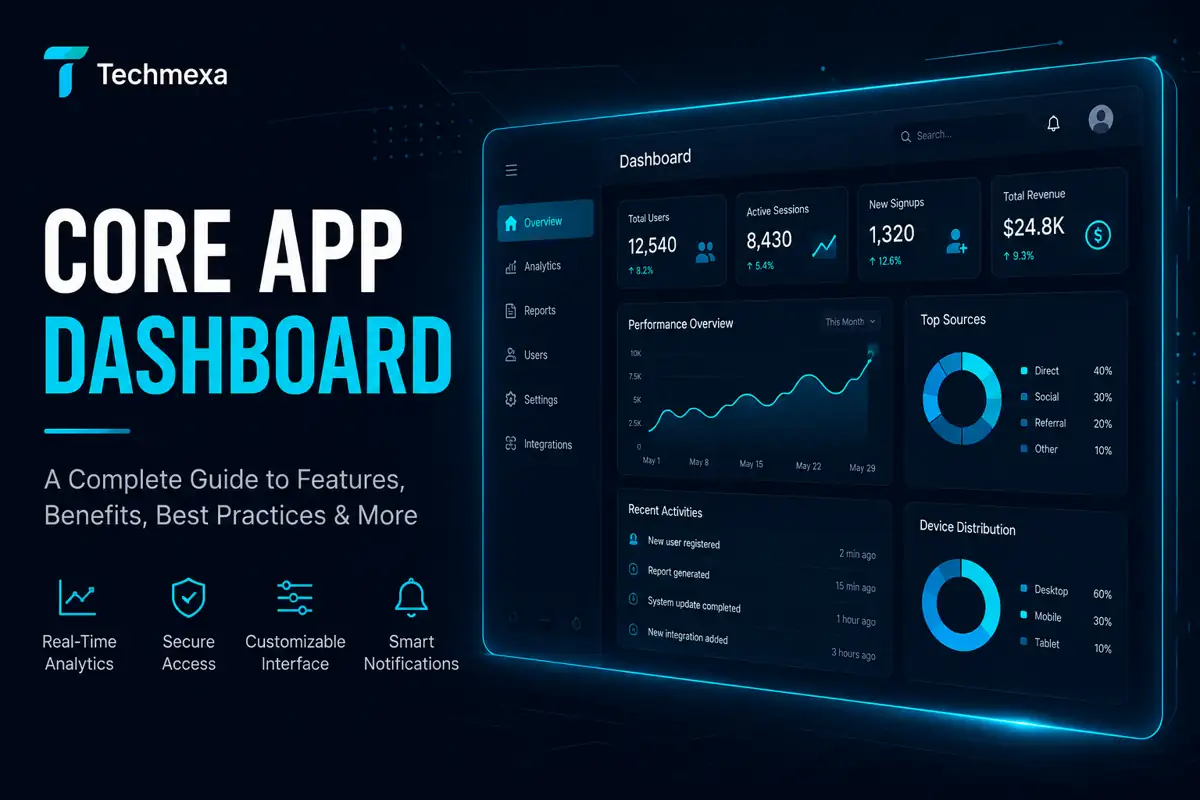
A Core App Dashboard acts as a central hub where users can access data, monitor performance, view notifications, manage settings, and interact with essential tools from a single location. It simplifies complex information through charts, KPIs, reports, and real-time updates, making it easier to track activities and make informed decisions.
In this guide, you’ll learn everything about the Core App Dashboard, including its components, key features, benefits, access methods, use cases, best practices, challenges, and future trends.
What is Core App Dashboard?
Core App Dashboard is a centralized interface that allows users to view, manage, and interact with important information from a single location. It brings together data, analytics, notifications, controls, and performance metrics into an organized dashboard environment.
The dashboard helps users monitor activities, track progress, and access essential tools without switching between multiple screens. As a result, it improves efficiency and provides better visibility into ongoing operations.
A Core App Dashboard typically displays real-time data through charts, graphs, KPI panels, tables, and interactive widgets. These visual elements help users understand trends, identify issues, and make informed decisions quickly.
Depending on the platform, the dashboard may also include user management features, reporting tools, notification centers, workflow controls, and integration capabilities. This allows organizations and individuals to manage various tasks from one unified dashboard.
Modern Core App Dashboards support customization, enabling users to personalize layouts, select preferred metrics, and configure alerts according to their needs. Many platforms also offer mobile accessibility, cloud connectivity, and advanced analytics.
Why People Look for the Core App Dashboard?
People search for the Core App Dashboard because they want quick access to important information, tools, and account features from a single interface. Instead of navigating through multiple sections, users can manage everything from one centralized location.
Many users look for the dashboard to monitor real-time data and track key activities. This helps them stay informed and respond to changes without delays.
Another common reason is performance monitoring. The dashboard provides visibility into metrics, reports, progress indicators, and operational data that support better decision-making.
Users also search for the Core App Dashboard when they need to manage notifications, settings, permissions, or workflows. A well-structured dashboard simplifies these tasks and improves productivity.
Organizations value dashboard platforms because they offer centralized control over users, data sources, integrations, and reporting functions. This reduces complexity and improves operational efficiency.
Comparison with Other Types of Dashboards
The Core App Dashboard differs from many traditional dashboards because it combines management tools, analytics, monitoring, and user controls within a single interface.
| Dashboard Type | Primary Purpose | Key Difference |
|---|---|---|
| Core App Dashboard | Centralized management and monitoring | Combines data, controls, notifications, and workflows |
| Analytics Dashboard | Data analysis and reporting | Focuses on insights and trends |
| Operational Dashboard | Real-time activity monitoring | Tracks ongoing operations |
| Executive Dashboard | Strategic decision-making | Displays high-level metrics |
| KPI Dashboard | Performance measurement | Focuses on KPIs only |
| Project Dashboard | Project tracking | Tracks tasks and deadlines |
| Financial Dashboard | Financial reporting | Monitors financial performance |
A Core App Dashboard often combines features from multiple dashboard categories. Users can view metrics, manage settings, monitor activities, and access operational tools from one place.
Components of a Core App Dashboard
A Core App Dashboard contains several essential components that help users manage information efficiently.
Charts and Graphs
Charts and graphs convert raw data into visual insights. They help users identify trends and patterns quickly.
KPIs and Metrics Panels
KPI panels display important performance indicators. These metrics help users measure progress and success.
Tables and Lists
Tables and lists organize detailed information in a structured format. Users can review records and compare data efficiently.
Interactive Filters and Controls
Filters allow users to customize displayed information. This makes analysis more focused and relevant.
Alerts and Notification
Alerts notify users about important updates, warnings, and system events. Timely notifications improve responsiveness.
Navigation and Login Elements
Navigation menus provide access to dashboard sections and tools. Login elements ensure secure authentication.
Real Time Monitoring
Real-time monitoring displays live information from connected systems. Users can react immediately to changes.
Customization Options
Customization features allow users to modify layouts, widgets, and settings. Personalized dashboards improve usability.
Integration Capabilities
Integration capabilities connect the dashboard with external applications, APIs, and data sources. This creates a unified management environment.
Key Features of a Core App Dashboard
A Core App Dashboard includes several powerful features that improve visibility, accessibility, and operational control.
Real-Time Data Updates
Real-time updates ensure users always see the latest information. This supports faster decision-making.
Configurational Controls and Customization
Users can customize layouts, widgets, and settings according to their needs. This creates a more efficient workspace.
Cross-Platform Accessibility
Modern dashboards work across desktops, tablets, and smartphones. Users can access important information from anywhere.
User Administration and Management
Administrators can manage user accounts, permissions, and access levels. This improves security and governance.
Notification Hub for Alerts and Updates
A notification hub centralizes alerts, reminders, and updates. Users can quickly identify important events.
Integration with Third-Party Tools and Extensions
Third-party integrations connect the dashboard with external software and services. This improves workflow efficiency.
Integration Capabilities
Advanced integrations support APIs, cloud platforms, databases, and business applications. These connections streamline data management.
Performance Monitoring
Performance monitoring tools track system health, activity levels, and operational metrics. Continuous monitoring helps identify issues early.
Interactive Canvas
An interactive canvas allows users to arrange widgets and visual elements according to their preferences. This enhances flexibility.
Enhanced Analytics
Enhanced analytics provide deeper insights through reporting, forecasting, trend analysis, and data visualization. Users can make more informed decisions.
Benefits of Core App Dashboard
A Core App Dashboard helps users manage information more efficiently by bringing data, controls, and insights together in one place. This improves productivity and operational visibility.
Better Decision Making
Users can access accurate data and analytics instantly. This helps them make informed decisions faster.
Time Saving
The dashboard reduces the need to switch between multiple systems. Users can complete tasks more quickly.
Better Monitoring
Real-time monitoring helps track activities, system status, and performance metrics. This improves awareness and control.
Centralized Control and Management
A centralized dashboard provides access to tools, settings, reports, and workflows from one interface. This simplifies management.
Enhanced User Experience and Interface
Intuitive layouts and organized navigation make the dashboard easier to use. Users can find information faster.
Enhanced Interaction
Interactive charts, filters, and controls improve engagement. Users can explore data more effectively.
Performance Tracking
Performance tracking tools help measure goals, progress, and operational results. This supports continuous improvement.
Customization and Flexibility
Users can personalize dashboard layouts and settings. Customized views improve relevance and usability.
Improved Productivity and Efficiency
Centralized access to information and tools reduces manual effort. This increases productivity and workflow efficiency.
How Users Access Core App Dashboards?
Accessing a Core App Dashboard is typically simple and secure. Most platforms provide authentication, personalization, and role-based access controls.
Authentication
Users sign in using approved credentials such as an email address or username and password. Some systems also support multi-factor authentication.
Role-Based Access
Role-based permissions determine which features and data users can access. This improves security and organization.
First-Time Tour
Many dashboards include a guided onboarding experience. This helps new users understand key features and navigation options.
Personalization
Users can customize themes, widgets, and layouts. Personalized settings improve the overall experience.
Refresh and Dashboards
Dashboards often support automatic or manual refresh options. This ensures data remains accurate and up to date.
What to Do If the Core App Dashboard Is Not Working?
If the Core App Dashboard stops working, several troubleshooting steps can help resolve the issue.
First, check your internet connection and refresh the page. Temporary network problems often cause loading issues.
Clear your browser cache and cookies if the problem continues. Outdated files can affect dashboard performance.
Make sure you are using a supported and updated browser. Older browser versions may not support modern dashboard features.
Check whether the platform is experiencing maintenance or service interruptions. Scheduled updates can temporarily affect access.
Verify your account permissions if specific sections are unavailable. Role-based restrictions may limit certain features.
Try accessing the dashboard from another device or network. This helps determine whether the issue is local or platform-related.
If the problem persists, contact support and provide details about the error. This can speed up troubleshooting.
Real-World Applications and Use Cases
Core App Dashboards are used across many industries to improve visibility, management, and decision-making.
Healthcare
Healthcare providers use dashboards to monitor patient data, operational performance, and resource allocation.
Finance
Financial institutions use dashboards to track transactions, revenue, expenses, and risk metrics.
Manufacturing
Manufacturers monitor production performance, inventory levels, and equipment status through dashboards.
Education
Educational institutions use dashboards to manage attendance, academic progress, schedules, and communication.
Business Intelligence
Business intelligence teams analyze KPIs, trends, and performance metrics using dashboard platforms.
IoT Management
IoT dashboards monitor connected devices, sensors, and network activity in real time.
Smart Home Integration
Smart home systems use dashboards to manage connected devices, automation, and security settings.
IT Operations
IT teams monitor server health, network performance, system uptime, and cybersecurity events.
Marketing Analytics
Marketing professionals track campaigns, conversions, traffic, engagement, and ROI through dashboards.
Best Practices for Core App Dashboard Design in 2026
A well-designed Core App Dashboard improves usability, supports faster decisions, and delivers a better user experience.
User-Friendly Interfaces
Keep navigation simple and intuitive. Users should find important information without confusion.
Logical Grouping
Place related metrics, controls, and reports together. Organized sections improve readability.
Visual Hierarchy
Highlight critical information first. Proper spacing, sizing, and positioning guide user attention.
Ensuring Robust Security Measures
Implement strong authentication, access controls, and data protection practices. Security should be a priority from the start.
Eliminate Cognitive Load
Remove unnecessary widgets and duplicate information. Cleaner dashboards improve focus and efficiency.
Scalability Considerations
Design the dashboard to support future growth. It should handle more users, data, and features without performance issues.
Regular Updates and Maintenance
Review dashboard components regularly. Ongoing maintenance ensures accuracy, reliability, and compatibility.
Customization Options for Different User Needs
Allow users to personalize layouts, widgets, and reports. Flexible dashboards serve different user requirements more effectively.
Live Feedback
Provide instant feedback when users perform actions. Responsive interactions improve usability.
Personalization
Use saved preferences and role-based settings to create a more relevant user experience.
Common Dashboard Layout Mistakes to Avoid
Even advanced dashboards can become ineffective if the layout is poorly designed.
Overloading with Metrics
Too many metrics create clutter and confusion. Focus on the most important data points.
Ignoring Mobile or Tablet Views
Users access dashboards on different devices. Responsive layouts ensure a consistent experience.
Using Too Many Colors
Excessive colors make dashboards harder to interpret. Use a consistent visual scheme.
Skipping User Testing
User testing helps identify usability issues before deployment. Regular feedback improves dashboard performance.
Tools and Technologies for Modern Core App Dashboards
Modern dashboards rely on various technologies to collect, process, and visualize data efficiently.
Business Intelligence Systems
Business Intelligence systems transform raw data into actionable insights through reporting and analytics.
Embedded Analytics
Embedded analytics integrates reports and visualizations directly into applications. Users can access insights without leaving the dashboard.
Visualization Frameworks
Visualization frameworks create charts, graphs, heatmaps, and interactive visual elements.
APIs and Data Connectors
APIs and data connectors enable communication between dashboards and external systems. They support seamless data integration.
You May Also Read It : NS Mainframe
Overcoming Common Challenges in Core App Dashboard Implementation
Organizations often face several challenges when implementing dashboard solutions.
Ensuring Data Accuracy and Integrity
Reliable dashboards depend on accurate data. Regular validation and synchronization help maintain data quality.
Balancing Complexity and Usability
Too many features can reduce usability. Focus on essential functions while keeping the interface simple.
Managing User Permissions and Security
Role-based access controls help protect sensitive information. Proper permission management improves security.
Handling Large Data Volumes and Performance Issues
Large datasets can affect dashboard speed. Optimization techniques and efficient data management help maintain performance.
Future Trends in Core App Dashboard Development
Dashboard technology continues to evolve as organizations demand smarter and more personalized experiences.
The Rise of AI and Machine Learning in Dashboards
AI and machine learning help dashboards identify patterns, detect anomalies, and generate recommendations automatically.
Enhanced Predictive Analytics and Forecasting
Predictive analytics helps users anticipate future outcomes. Forecasting tools support proactive decision-making.
Greater Personalization and User Customization
Future dashboards will offer more personalized layouts, insights, and user experiences based on individual preferences.
Conclusion
The Core App Dashboard serves as a centralized platform for monitoring data, managing workflows, tracking performance, and accessing important tools from one location. Its combination of analytics, real-time monitoring, customization, and integration capabilities makes it valuable across multiple industries.
As dashboard technology advances, features such as artificial intelligence, predictive analytics, enhanced personalization, and cross-platform accessibility will become increasingly important. Organizations that implement effective dashboards can improve decision-making, productivity, and operational efficiency.
Frequently Asked Questions
1. What is a Core App Dashboard?
A centralized dashboard for managing data, analytics, notifications, and user activities.
2. Is the Core App Dashboard available on mobile devices?
Yes, most platforms support desktop, tablet, and mobile access.
3. Who can use a Core App Dashboard?
Students, parents, staff, businesses, and organizations can use it.
4. Why is real-time data important in a dashboard?
It provides up-to-date information for faster decision-making.
5. Can users customize their dashboard?
Yes, users can often customize layouts, widgets, and settings.
6. How does role-based access work?
Users only see data and features allowed by their assigned role.